
Our workforce
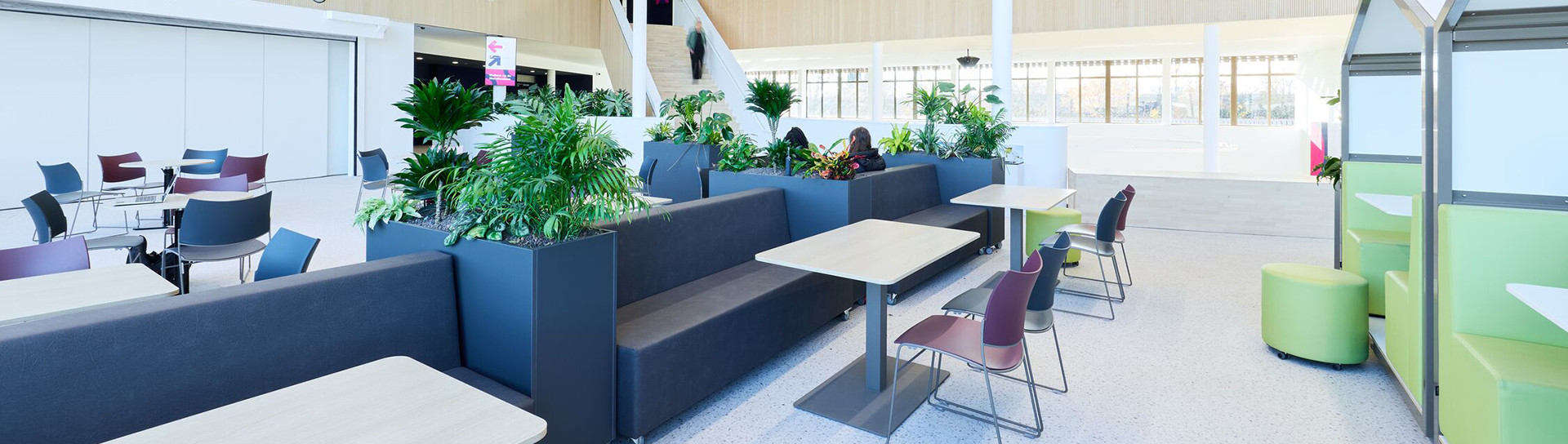
Our workforce
With a vast share of our employees working in various factories all over the world, we are committed to creating safe and healthy work environments. Our workforce spreads across two continents and, as an employer, we strive for gender diversity and social inclusion. The IROs found during our double materiality process are described in the following table.
| IRO description | IRO classification | Value chain |
| A safe and healthy work environment leads to reduction of accidents and illness rates | Impact | Own operations |
| Organise alternative worker representation in operating countries lacking union rights | Opportunity | Own operations |
| Furniture manufacturing tasks are well-suited to employ and train people with disabilities, since the sector offers a variety of roles that can be adapted to different skill levels, providing valuable opportunities for skill development and career growth. | Opportunity | Own operations |
| Gender distribution in own workforce, management, board and supervisory board | Opportunity | Own operations |
Our actions
Since 2018, we have professionalised our employee development program through the implementation of performance management. We started with our largest share of employees in the Netherlands, gradually expanding to Western European countries and, in 2026, we further integrated our processes with Central and Eastern European countries.
In the coming years, we will have a more international focus to standardise our HR approach and collaboration between HR departments globally. Our policies will be reviewed and standardised across all entities.
Employee experience
In 2025, we measured the employee experience for the 8th time among all Royal Ahrend colleagues globally, providing valuable insights into satisfaction, experiences and recommendations. We truly believe that a company is the sum of its employees who are working, innovating and creating together. The results of the survey are followed up with our managers and individual teams to determine areas of improvement.
Employee health and wellbeing
In recent years, we have invested in health and safety for our employees. All our production locations are ISO 45001 certified and we have further improved our health and safety management system. Internal and external audits on occupational health and safety provide us with valuable insights into how we can further improve employee health and well-being.
All factory colleagues are trained on occupational health and safety at work on an annual basis. During our toolbox sessions we include all relevant topics. These sessions are organised several times per year. Toolbox sessions are organised by team managers and facilitate a dialogue around one or two topics per session. In addition, local Health Safety Quality and Environment (HSQE) managers ensure that we inspect workstations in our factories to determine improvements and prevent accidents.
We also report so called ‘almost accidents’ to prevent actual accidents from happening. When accidents occur, they are always evaluated and corrective actions are implemented and reported back to the local HSQE manager.
Vitality program
The vitality program is one of our initiatives to improve employee health and well-being. This program does not only focus on occupational health and safety, but aims to create awareness around four themes throughout the organisation. ‘Move it’ facilitates active sports initiatives such as padel, running and cycling, ‘Love your food’ gives employees insight into healthy foods, ‘Happy & Healthy’ focuses on mental health and lifestyle and ‘Future proof’ supports employees’ development for future employability, retirement and a healthy work-life balance.
In addition to raising awareness on vitality and health, the program is expected to have a positive impact on absenteeism, employee satisfaction and involvement. It also aims to keep employees healthy and fit. Furthermore, we believe that investing in our employees’ vitality enables us to attract and retain talent within our company.
Engagement and collaboration
With our growing international organisation, we have intensified collaboration initiatives to create a better connection between departments globally and establish a collaborative DNA. Locally, we have organised various inititiatives to enhance employee engagement through works councils and employee committees.
Training and development
Each year, our colleagues go through an individual performance cycle with their manager to determine development areas and career growth. Employees can attend in-company training courses or apply for external ones. With the introduction of our online training platform, Ahrend Learning, we support our employees through a wide variety of training courses.
We set up an onboarding program for all new employees in order to get them acquainted with our company, our way of working and market propositions. This is a major improvement, because all Royal Ahrend employees are now being onboarded on all important topics.
Diversity, equality and inclusion
Royal Ahrend offers long-term employment, with an average contract duration of 18 years. Over time, we’ve learned that a greater diversity improves collaboration and compatibility among colleagues. We actively focus on gender diversity and social inclusion. Our recruitment process is designed to attract diverse candidates and, for each vacancy, we assess which profile best complements the existing team.
Besides gender diversity, we also invest in equal employment opportunities for workers whom are differently abled, but do not fit into regular working processes. As a social entrepreneur we create employment in various departments through job carving, making workplaces easily accessible for colleagues with physical disabilities and career development through work-learning trajectories.
Since 2023, we have conducted annual Diversity, Equity, and Inclusion (DEI) surveys to better understand our employees’ experiences. The insights help us strengthen their sense of belonging and evaluate whether employees feel empowered to speak up against discrimination and inappropriate behaviour at work.
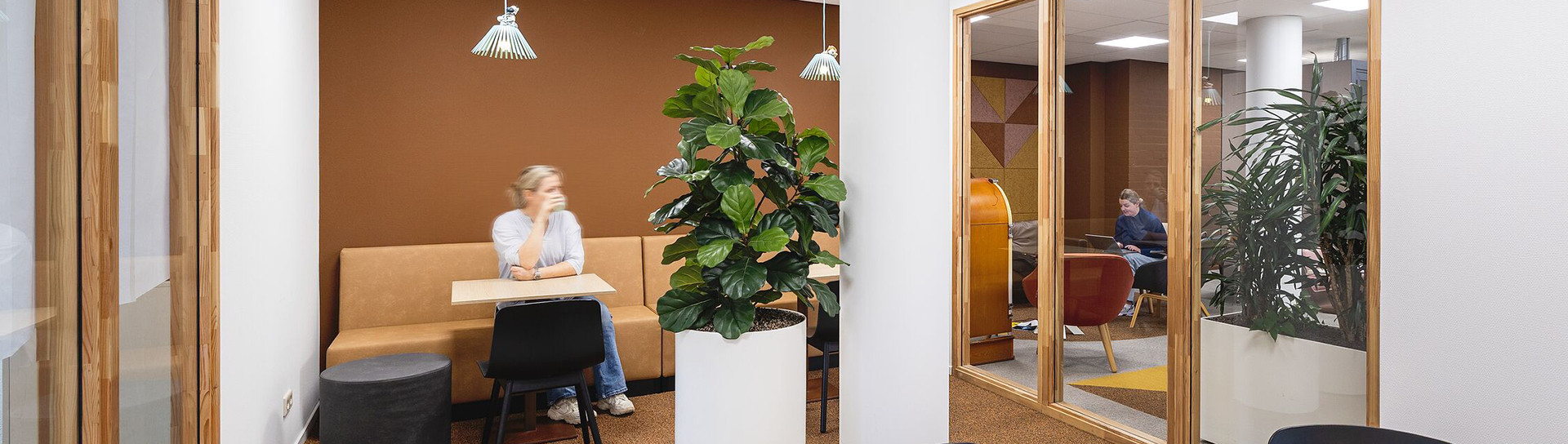
Employees in own workforce per country
| Region | Country | Headcount |
| European Union | Netherlands | 603 |
| Czech republic | 178 | |
| Other EU | 77 | |
| Subtotal EU | 858 | |
| Europe | United Kingdom | 26 |
| Other non-EU | 1 | |
| Total Europe | 885 | |
| Asia | China (people's republic of) | 127 |
| Other Asia | 14 | |
| Total Asia | 141 | |
| Total headcount | 1.026 |
Our targets and progress
Over the past 10 years, Royal Ahrend has undergone significant change through acquisitions and expansion. Integrating all entities has been a strategic project for the past years and we are working towards becoming one Royal Ahrend. In 2025, we further strengthened international collaboration between departments and have integrated various HR processes and procedures. We also introduced the Royal Ahrend Company Guidebook, which outlines our company strategy, structure and cultural values. This guidebook defines our way of working across the organisation.
Employee experience
In 2025, our overall employee experience score was 73,2, a positive change compared to 2024 (72,6). In 2025, this survey had a slightly lower response rate of 73,8% (2024: 83,4%). In the 2025 EXI measurement, we have seen the 4 most important Employee Experience Index drivers for Royal Ahrend broadly still proved to be important. On all these topics improvement was identified in 2025: leadership, freedom and empowerment, communication and working conditions. The topics are included in our 2026 follow up plan to further improve our employees' experiences at work. Two deep dive sessions with Royal Ahrend managers are held to discuss results and improvement actions.
In 2026, we will focus on employee engagement with our international employees to facilitate knowledge sharing amongst teams and to anticipate topics that are important for our employees.
Development of employee experience
Bovenstaande grafiek in tabel-vorm:
| Year | Employee Experience |
|---|---|
| 2018 | 65,7 |
| 2019 | 68,5 |
| 2020 | 70,4 |
| 2022 | 66,8 |
| 2023 | 70,9 |
| 2024 | 72,6 |
| 2025 | 73,8 |
Health and safety
In 2025, we continuted offering voluntary health checks at various locations. This anonymous check is based on vitality, work-life balance and lifestyle. Employees receive tailored advice from an independent and external party. Through these checks we aim to reach sustainable employability past the retirement age and decrease illness rates. Absenteeism prevention is high on the agenda in order to reduce absenteeism and even prevent employees from quitting their job.
Our ambition is to reduce absenteeism to below 4.5% (2025: 5.7%). Although we have not yet achieved this target in recent years, we continue to focus on creating a healthy and engaging working environment. Encouraging improvements in our EXI scores, combined with ongoing initiatives in the areas of leadership, empowerment, communication and working conditions, strengthen our confidence that absenteeism will decrease in the coming years.
In 2025, nearly all our operations were covered by our occupational health and safety management system (ISO 45001) or through legal requirements. Nearly all employees and non-employees are covered by this system. Three work related incidents were reported, of which two involved own employees and one non-employee. Our goal for 2030 is to have zero severe accidents on the workfloor. This is defined as medical treatment cases (MTC) and fatalities as a result of work-related injuries and work-related ill health. In 2025 we reported one MTC.
Diversity
Gender diversity is an important subject for Royal Ahrend, as the company has traditionally had a predominantly male workforce. To build a more diverse team, we have adopted two key approaches:
- Setting gender balance targets for our Supervisory Board, Board of Directors, and sub-top management.
- Actively encouraging the recruitment of women in specific teams and roles to strengthen overall diversity.
In 2025, our workforce-wide, gender diversity remained stable, with at least 33% male and female representation. Currently, 8% of our sub-top management positions are held by women. Our goal is to increase this to 28% by 2027. However, due to limited turnover in recent years, this target is not easy to meet. By the end of 2025, 11% of our overall workforce was differently abled. This percentage is similar to year end 2024.
| KPI | 2023 | 2024 | 2025 | Target 2027 | Target 2030 |
| Employee Experience Index | 70,9 | 72,6 | 73,2 | 75 | - |
| Global headcount | 1.036 | 1.038 | 1.026 | - | - |
| Gender diversity Supervisory Board | 60% male 40% female |
60% male 40% female |
60% male 40% female |
Uphold at least 33,33% male/female | Uphold at least 33,33% male/female |
| Gender diversity Board of Directors | 100% male 0% female |
50% male 50% female |
50% male 50% female |
Uphold at least 50% male/female | Uphold at least 50% male/female |
| Gender diversity sub-top management | 83% male 17% female |
83% male 17% female |
92% male 8% female |
72% male 28% female |
72% male 28% female |
| Gender diversity total workforce | 67% male 33% female |
67% male 33% female |
67% male 33% female |
||
| Differently abled people in workforce | 11% | 11% | 11% | ||
| Coverage of employees by the company's health and safety management system | 100% | 100% | 99% | 100% | 100% |
| Coverage of non-employees by the company's health and safety management system | 100% | 100% | 100% | 100% | 100% |
| Number of work-related accidents | 9 | 8 | 3 | - | Zero severe accidents** |
| Of which lost time injuries (excl. fatalities) (LTI) | 7 | 7 | 2 | - | - |
| Of which restricted work cases (RWC) | 0 | 0 | 0 | - | - |
| Of which medical treatment cases (MTC) | 2 | 1 | 1 | - | 0 |
| Of which fatalities | 0 | 0 | 0 | 0 | 0 |
| Number of cases of recordable work-related ill health (# employees, subject to legal restrictions on the collection of data) | 18 | 19 | 19 | * | * |
| Number of calendar days lost to work-related injuries and fatalities from work-related accidents, work-related ill health and fatalities from ill health | 164 | 437 | 4 |